
Ernesto Köhler
Overview
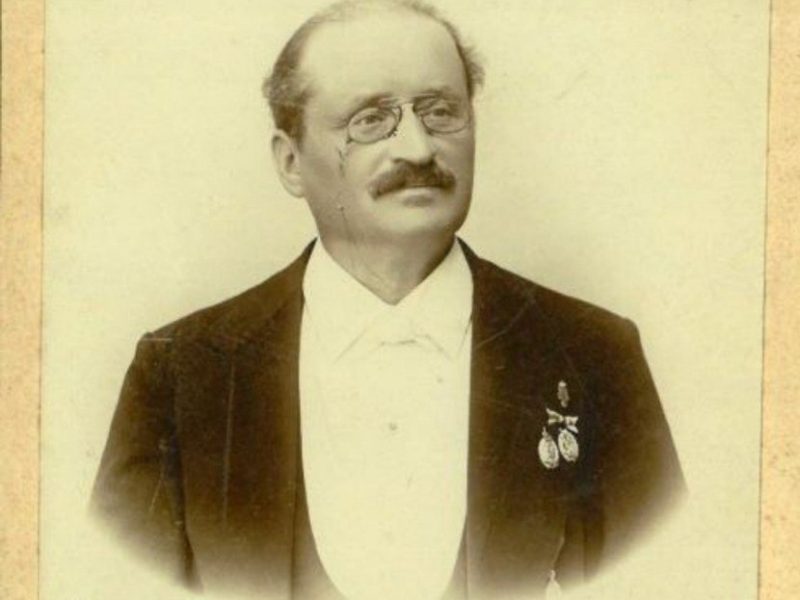
Ernesto Köhler was an Italian-born flutist, composer, and pedagogue whose educational works have influenced generations of flutists around the world.
Widely regarded as one of the most important composers in the history of flute pedagogy, Köhler wrote more than one hundred works for the instrument, including études, methods, concert pieces, chamber music, and salon works that remain central to flute education today.
Although celebrated during his lifetime as one of Europe’s leading virtuoso flutists and principal flutist of the Imperial Theatres in Saint Petersburg, Köhler’s greatest legacy lies in his extraordinary contribution to flute literature. His pedagogical works continue to be studied in conservatories, universities, competitions, and private studios worldwide, making him one of the most frequently performed and studied composers in the flute repertoire.
Early Life and Musical Education
Ernesto Köhler was born on December 4, 1849, in Modena, Italy, into a distinguished musical family. His father, Giuseppe (Venceslau Joseph) Köhler, served as principal flutist of the Duke of Modena’s court orchestra and became Ernesto’s first teacher.
Displaying exceptional musical talent from an early age, Köhler quickly developed into a remarkable performer. As a child he toured extensively throughout Italy with his brother Ferdinando, an accomplished pianist, receiving enthusiastic praise for his brilliant technique, refined tone, elegant style, and expressive musicianship. By the age of nineteen he was already performing professionally alongside his father.
Career in Vienna and Saint Petersburg
In 1869, at only twenty years of age, Köhler was appointed principal flutist of Vienna’s Carltheater Orchestra. During his two years in Vienna he also gave concerts throughout Austria and published several flute compositions that quickly attracted the attention of European flutists.
His career changed dramatically in 1871 when the renowned Italian flutist and composer Cesare Ciardi, then professor at the Saint Petersburg Conservatory and principal flutist of the Imperial Theatre, invited him to Russia. Köhler accepted a position with the orchestra of the Imperial Ballet in Saint Petersburg, where he would spend the remainder of his career.
Following Ciardi’s death in 1877, Köhler assumed an increasingly prominent role within the Imperial Theatres. In 1900 he became First Flute of the Imperial Russian Opera, serving as the leading flutist of the Russian Empire. His distinguished career in Saint Petersburg lasted thirty-five years, during which he established himself as one of the foremost orchestral flutists of his generation.
Composer
During his lifetime Köhler enjoyed an international reputation not only as a virtuoso performer but also as a prolific composer.
Although modern flutists know him primarily through his educational music, his contemporaries also admired his operas, ballets, and orchestral works. His opera Ben Achmed, premiered at the Mariinsky Theatre in 1893, enjoyed considerable success, while his ballet Clorinda, Queen of the Mountain Fairies became popular at the Imperial Theatre.
His compositions frequently combined the lyrical elegance of the Italian tradition with the expressive richness of Russian Romanticism.
Contemporary critics praised the beauty of his melodies, his refined understanding of the flute, and his remarkable ability to write music that was both technically brilliant and musically engaging.
Flute Pedagogy
Köhler’s greatest contribution to musical history was his work as a pedagogue.
He composed more than one hundred works for the flute, covering virtually every stage of technical and musical development.
Unlike many nineteenth-century virtuoso composers who wrote primarily for advanced performers, Köhler deliberately created repertoire for students as well as professionals. His music combines progressive technical development with expressive musical writing, allowing flutists to build technique while cultivating artistry.
Around 1880 he published his Flöten-Schule (Theoretical and Practical Flute School), one of the most influential flute methods of the nineteenth century. Adopted by numerous European conservatories, the method helped establish systematic flute instruction and remains an important historical pedagogical resource.
Among his most celebrated educational publications are Progress in Flute Playing, Op. 33, 25 Romantic Études, Op. 66, 30 Virtuoso Études, Op. 75, School of Velocity, Op. 77, 22 Exercises for Technique and Interpretation, Op. 89, and 20 Easy Progressive Lessons, Op. 93. These collections continue to be studied by flutists throughout the world and have become fundamental works of the modern flute repertoire.
Instrument Preference
Köhler occupies an interesting place in flute history because, despite living during the widespread international adoption of Theobald Böhm’s cylindrical flute, he remained a devoted advocate of the traditional wooden conical-system flute throughout his career.
He strongly endorsed the Zimmermann Model flute, praising its easy response, large and beautiful tone, pure intonation, and innovative mechanism.
His support reflected the continued popularity of the German conical flute tradition well into the late nineteenth century and illustrates the coexistence of different flute schools during this important transitional period.
Publications and Other Activities
Many of Köhler’s compositions were published by Julius Heinrich Zimmermann, one of Europe’s most important music publishers, helping to establish his international reputation. Through Zimmermann’s publishing network, Köhler’s educational works reached musicians across Europe, Russia, America, and Australia.
Beyond the flute, Köhler also composed for voice, chamber ensembles, and the stage. He wrote one of Russia’s earliest published mandolin methods, demonstrating the breadth of his musical interests.
Legacy
Few composers have exercised a greater practical influence on flute education than Ernesto Köhler.
For more than a century, his studies have introduced generations of flutists to articulation, finger technique, tone production, phrasing, musical expression, and virtuosity. His concert works remain favorites among performers, while his pedagogical collections continue to occupy an essential place in conservatory curricula worldwide.
Today, Köhler’s music is performed across the globe, and his legacy remains particularly strong in Saint Petersburg, where the annual Virtuosi of the Flute Festival regularly features his compositions in recognition of his enduring contribution to the instrument.
More than one hundred years after his death, Ernesto Köhler remains one of the most influential figures in flute history — a virtuoso performer, distinguished composer, and exceptional teacher whose music continues to inspire flutists at every stage of their musical journey.
Notable Works
- Theoretical and Practical Flute School (Flöten-Schule)
- Progress in Flute Playing, Op. 33
- 25 Romantic Études, Op. 66
- 30 Virtuoso Études in All Major and Minor Keys, Op. 75
- School of Velocity (Daily Studies), Op. 77
- 22 Exercises for Technique and Interpretation, Op. 89
- 20 Easy Melodic Progressive Lessons, Op. 93
- The Pearl of the North, Op. 100
- Concerto in G Minor, Op. 30
- Concert Piece, Op. 52
- Lullaby, Op. 47
- Meditation, Op. 81
- Ben Achmed (opera, 1893)
- Clorinda, Queen of the Mountain Fairies (ballet)
Contributions
- One of the most influential flute pedagogues in history
- Principal flutist of the Imperial Theatres in Saint Petersburg for thirty-five years
- First Flute of the Imperial Russian Opera
- Composed more than 100 works for the flute
- Author of one of the nineteenth century’s most influential flute methods
- Created pedagogical repertoire that remains a cornerstone of flute education worldwide
- Helped preserve the German conical flute tradition through his advocacy of Zimmermann flutes
- Combined Italian lyricism with the Russian flute tradition in both performance and composition
- Left one of the most enduring educational legacies in the history of the flute