
Cesare Ciardi
Overview
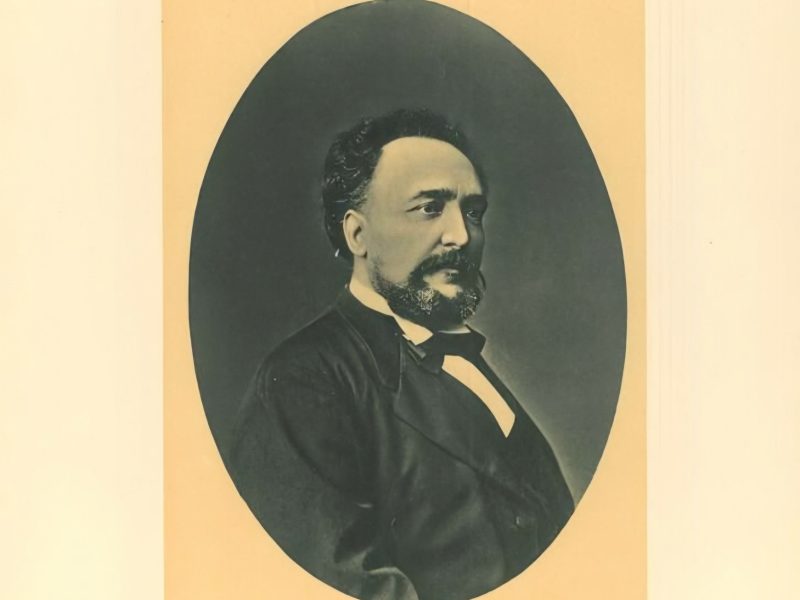
Cesare Ciardi was an Italian flutist, composer, pedagogue, and one of the most brilliant flute virtuosos of the nineteenth century. Born in Tuscany and later active in Saint Petersburg, he became an important bridge between the Italian flute tradition and the developing Russian school of flute playing.
Admired for his clear, beautiful sound, elegant phrasing, and impeccable technique, Ciardi was known as one of the leading flutists of his generation. His career brought him from Italy to the Russian Imperial Court, where he served as chamber flutist to the Tsar, performed in the Imperial Theatres, taught at the Saint Petersburg Conservatory, and influenced a generation of Russian musicians.
Early Life and Training
Cesare Ciardi was born on June 28, 1818, in Prato, Tuscany. He showed exceptional musical ability from an early age and studied music theory with Giuseppe Nuti and flute with Luigi Carlesi. He later continued his education in Florence, where he earned a diploma as a professor in 1838.
Ciardi’s talent was recognized very early. As a child, he performed publicly and gained the attention of Niccolò Paganini, whose support helped advance his reputation. This association with Paganini contributed to Ciardi’s image as a dazzling virtuoso and helped establish him as one of Italy’s most promising young flutists.
Career in Italy
Before moving to Russia, Ciardi built a successful career as a soloist in Italy. He performed widely, appeared in important musical centers, and became known for his brilliant execution, refined tone, and expressive style.
His playing represented the Italian bel canto tradition on the flute. Like many Italian virtuoso-composers of the period, he wrote music for his own performances, creating works that combined lyrical melodies, operatic themes, and brilliant technical display.
Saint Petersburg and the Imperial Court
In 1853, Ciardi moved to Saint Petersburg, where he became one of the most important foreign musicians in Russian musical life. He was appointed chamber flutist to Tsar Nicholas I and performed in the orchestras of the Imperial Theatres, including the Imperial Opera and Ballet.
Ciardi remained in Russia for the rest of his life. His presence in Saint Petersburg helped bring Italian flute virtuosity into the Russian Imperial musical world, and his career became closely connected with the development of professional flute playing in Russia.
Teacher and Professor
Ciardi taught at several important institutions in Saint Petersburg, including the Royal Chapel, the Theatre School, and the Saint Petersburg Conservatory.
When the Saint Petersburg Conservatory was founded in 1862, Ciardi became one of its early flute professors. His teaching helped establish a structured flute tradition in Russia, combining Italian virtuosity with the discipline of conservatory training.
Among his students was the young Pyotr Ilyich Tchaikovsky, who studied flute with Ciardi. Ciardi’s influence also extended through Ernesto Köhler, whom he recommended for a position in Saint Petersburg and who later succeeded him as one of the leading flutists of the Imperial Theatres.
Instrument Preference
Ciardi remained devoted to the old-style Viennese flute throughout his career. Although the Böhm flute was gaining ground during his lifetime, Ciardi preferred the traditional wooden flute, valuing its clarity, tonal beauty, and expressive flexibility.
His preference places him within the nineteenth-century tradition of great virtuosos who continued to perform on sophisticated conical wooden flutes even as the modern Böhm system was becoming increasingly widespread.
Composer
Ciardi was a prolific composer whose works were written primarily to showcase the flute’s expressive and technical possibilities. His music often combines Italian lyricism, operatic brilliance, and virtuoso display.
He composed more than one hundred works, including concert pieces, fantasies, études, duets, chamber music, and orchestral works featuring the flute. Many of his pieces draw on popular operatic themes by composers such as Bellini, Donizetti, Rossini, and Verdi, reflecting the strong influence of Italian opera on his musical language.
During his Russian years, Ciardi also incorporated Russian themes into his compositions, most notably in Le Carnaval Russe, one of his best-known works for flute and orchestra.
Major Works
Among Ciardi’s most important concert works are Gran Concerto in D Major, Op. 129, Le Carnaval Russe, and Gran Concerto Militare for flute, clarinet, trumpet, and orchestra. These works display the brilliance, agility, and dramatic character that made Ciardi famous as a virtuoso.
His flute-and-piano works include numerous fantasies and variations on operatic themes, many of them intended for salon and concert performance. These pieces reflect the nineteenth-century tradition of turning popular opera melodies into dazzling instrumental showpieces.
Pedagogical Works
Ciardi also made important contributions to flute pedagogy. His didactic works include études, preludes, cadenzas, and methods designed to develop technique, phrasing, improvisation, and expressive fluency.
His pedagogical publications include:
- 6 Studi per Flauto
- 22 Études
- 12 Preludes, Op. 127
- 50 Point d’Orgue pour le Conservatoire de St. Petersbourg
- Neue Flötenschule
These works reflect Ciardi’s practical experience as both performer and teacher and show his concern for developing the technical and artistic abilities of young flutists.
Artistic Personality
Ciardi was remembered not only as a musician but also as a highly artistic personality. During his years in Saint Petersburg, he was admired in aristocratic and theatrical circles and was known for his charm, imagination, and broad artistic interests.
In addition to music, he was active as a caricaturist and visual artist, creating sketches and portraits of musicians and theatrical figures. This artistic versatility added to his reputation as one of the colorful personalities of Imperial Russian musical life.
Final Years
Cesare Ciardi died on June 13, 1877, in Strelna, near Saint Petersburg. After his death, Ernesto Köhler continued the Italian-Russian flute tradition that Ciardi had helped establish in the Imperial Theatres.
Ciardi’s role in Russia was significant: he brought Italian flute virtuosity to Saint Petersburg, helped train important musicians, influenced the early development of the Saint Petersburg Conservatory, and expanded the flute repertoire through his numerous compositions.
Legacy
Cesare Ciardi occupies an important place in nineteenth-century flute history as a virtuoso performer, composer, and teacher who connected Italian and Russian musical traditions.
His music preserves the brilliance of the Italian Romantic flute style, while his work in Saint Petersburg contributed to the development of Russian flute playing. Through his students, his compositions, and his influence on musicians such as Tchaikovsky and Köhler, Ciardi became a central figure in the history of the flute in Imperial Russia.
Today, his works remain valuable for performers and researchers interested in nineteenth-century flute virtuosity, Italian opera fantasy traditions, and the historical development of flute playing in Russia.
Selected Works
- Gran Concerto in D Major, Op. 129
- Le Carnaval Russe for flute and orchestra
- Gran Concerto Militare for flute, clarinet, trumpet, and orchestra
- Il Carnevale di Venezia, Op. 22
- Fantasia sui motivi della Beatrice di Tenda, Op. 21
- Fantasia sui motivi di Luisa Miller, Op. 23
- Simpatie pel Rigoletto, Op. 27
- Duo concertante sui motivi de I due Foscari, Op. 29
- Fantasia sui motivi del Trovatore, Op. 38
- Fiori Rossiniani, Op. 47
- Le Rossignol, Op. 61
- Il Pifferaro, Op. 122
- Duetto Concertante, Op. 121
- 12 Preludes, Op. 127
- 6 Studi per Flauto
- 22 Études
- 50 Point d’Orgue pour le Conservatoire de St. Petersbourg
- Neue Flötenschule
Contributions
- One of the leading Italian flute virtuosos of the nineteenth century
- Chamber flutist to Tsar Nicholas I
- Principal flutist in the Imperial Theatres of Saint Petersburg
- Professor at the Saint Petersburg Conservatory
- Teacher of Pyotr Ilyich Tchaikovsky
- Mentor and predecessor of Ernesto Köhler in Saint Petersburg
- Important representative of the old-style Viennese flute tradition
- Composer of more than one hundred works, many featuring the flute
- Helped connect Italian flute virtuosity with the emerging Russian flute school