
Hotteterre Family
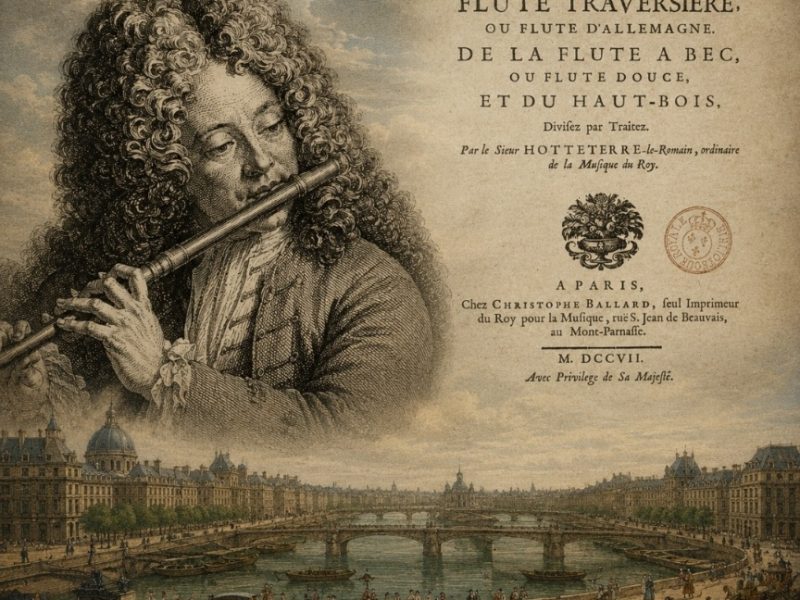
The Hotteterre family was one of the most influential dynasties of woodwind instrument makers in history. Active during the seventeenth and eighteenth centuries, the family played a fundamental role in the development of the French Baroque transverse flute while also producing recorders, oboes, bassoons, musettes, and other woodwind instruments for the royal court of Louis XIV.
Today, the Hotteterre name is synonymous with the emergence of the Baroque flute. Their instruments, craftsmanship, and musical innovations helped establish the French school of flute making and influenced generations of performers, composers, instrument makers, and educators throughout Europe.
Origins
The Hotteterre family originated in La Couture-Boussey, Normandy, a town that would later become one of France’s most important centers of woodwind instrument making.
During the seventeenth century, several members of the family established workshops in Paris, where they supplied instruments to court musicians and became closely associated with the musical life of Versailles.
Among the best-known members of the family were:
- Jean Hotteterre (c. 1605–1692)
- Martin Hotteterre (d. 1712)
- Nicolas Hotteterre
- Louis Hotteterre (d. 1716)
- Jacques-Martin Hotteterre “Le Romain” (1674–1763)
Together, they created one of the most respected names in European woodwind craftsmanship.
The Hotteterre Workshops
The family’s Paris workshops specialized in producing high-quality woodwind instruments for professional musicians, aristocratic patrons, and the French royal court.
Their output included:
- Baroque transverse flutes
- Recorders
- Oboes
- Bassoons
- Musettes
- Bass flutes
- Ivory and ebony instruments
- Woodwind accessories
Different branches of the family identified their work with distinctive maker’s marks, including the famous anchor, as well as the fleur-de-lis and star, allowing historians to attribute surviving instruments to particular workshops.
Contribution to Flute Making
The Hotteterres were among the principal architects of the French Baroque flute.
Their work helped establish many of the characteristics associated with the instrument, including:
- Three-piece construction
- Refined conical bore
- Single-key mechanism
- Improved intonation
- Greater tonal flexibility
- Elegant balance and response
- A warm, expressive sound suited to chamber music
Although historians continue to debate which innovations can be attributed to individual family members, there is broad agreement that the Hotteterre workshops played a central role in the evolution of the Baroque transverse flute during the late seventeenth and early eighteenth centuries.
Beyond the Flute
While best known for their flutes, the Hotteterres were master builders of a wide range of woodwind instruments.
Their workshops produced recorders, oboes, bassoons, and musettes that were highly regarded throughout France and contributed significantly to the development of French Baroque woodwind performance.
Their expertise extended beyond construction to the practical understanding of acoustics, bore design, keywork, and tonal refinement, qualities that distinguished their instruments from many contemporary makers.
Jacques-Martin Hotteterre
The family’s best-known member, Jacques-Martin Hotteterre “Le Romain,” combined the traditions of instrument making with an exceptional career as a flutist, composer, and pedagogue.
Born into the family’s workshop, he gained firsthand knowledge of flute construction before becoming a court musician under Louis XIV. His landmark treatise, Principes de la flûte traversière (1707), became the first comprehensive method for the Baroque transverse flute and helped standardize flute technique throughout Europe.
His writings connected instrument design with musical performance, making the Hotteterre family’s craftsmanship influential not only through their instruments but also through their pedagogical legacy.
Surviving Instruments
Only a limited number of Hotteterre instruments have survived, making them among the most important historical woodwinds in museum collections.
Original flutes attributed to the family are prized for their exceptional craftsmanship, elegant proportions, and remarkable tonal qualities. These instruments continue to serve as reference models for scholars, conservators, and modern makers specializing in historical reproductions.
Influence on Modern Historical Flute Making
The Hotteterre family continues to influence the world of historical instrument making.
Many contemporary builders of Baroque traversos study surviving Hotteterre instruments when producing historically informed reproductions. Their work has shaped modern understanding of early French flute design and remains an important reference for performers, educators, researchers, and museums worldwide.
Legacy
The Hotteterre family occupies a unique position in the history of the flute. Through their workshops, they helped define the design and sound of the French Baroque transverse flute, while Jacques-Martin Hotteterre’s pedagogical writings established many of the performance principles associated with the instrument.
More than three centuries later, the Hotteterre name remains one of the most respected in historical flute making, representing the intersection of craftsmanship, performance, and musical innovation that laid the foundation for the modern flute tradition.