
Pierre-Gabriel Buffardin
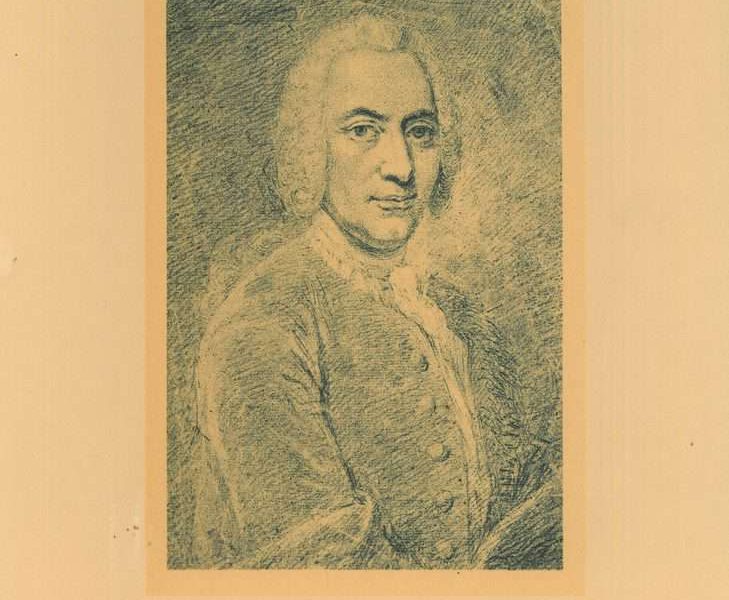
Overview
Pierre-Gabriel Buffardin was a French Baroque flutist, composer, teacher, and one of the most influential early figures in the history of the transverse flute. Although relatively few of his compositions survive, his importance rests on his extraordinary reputation as a virtuoso performer and on his role as teacher of Johann Joachim Quantz, one of the most important flute pedagogues in history.
As principal flutist of the Dresden Hofkapelle from 1715 to 1749, Buffardin stood at the center of one of Europe’s greatest musical institutions. His playing helped establish the transverse flute as a brilliant solo instrument in German-speaking Europe, while his teaching transmitted French virtuoso style to the next generation of flutists.
Through Quantz, Buffardin’s influence extended far beyond Dresden and became part of the foundation of eighteenth-century flute pedagogy.
Early Life
Pierre-Gabriel Buffardin was born in France, most commonly identified as Toulon, in 1693. Some sources give Marseille as his birthplace or suggest uncertainty around the exact location, but he is generally associated with Provence and the French Baroque flute tradition.
He came from a family connected with instrument making. His father, Jean-Joseph Buffardin, was reportedly an instrument maker, and this background may have contributed to Buffardin’s deep understanding of the flute and its technical possibilities.
Before his Dresden appointment, Buffardin traveled widely. Around 1711, he met Johann Jacob Bach, the elder brother of Johann Sebastian Bach, in Constantinople and taught him the flute. This early episode already shows Buffardin as part of an international musical network.
Dresden Court Career
In 1715, Buffardin was appointed principal flutist of the Dresden Hofkapelle, the court orchestra of the Elector of Saxony. Dresden was one of the most important musical centers in Europe, known for its exceptional orchestra and cosmopolitan artistic culture.
Buffardin remained in Dresden for more than three decades, serving from 1715 until 1749. His position was highly respected, and his salary was eventually increased significantly, reflecting the value placed on his artistry at court.
As a performer, Buffardin was especially admired for his brilliance, agility, and technical command. Johann Joachim Quantz later wrote that Buffardin excelled particularly in fast pieces, a comment that has become one of the most famous descriptions of his playing.
Teacher and Founder by Lineage
Buffardin did not leave behind a major written method, but his place in flute pedagogy is secure because of the students he influenced.
His most important student was Johann Joachim Quantz, who studied with him in Dresden in 1719. Although their formal lessons lasted only a few months, Quantz absorbed Buffardin’s French virtuoso style, especially his brilliant technique and command of rapid passagework.
Quantz later became the author of Versuch einer Anweisung die Flöte traversiere zu spielen (On Playing the Flute, 1752), one of the most important flute treatises ever written. Through Quantz, Buffardin’s influence entered the written tradition of flute pedagogy and helped shape the German flute school.
Other pupils associated with Buffardin include Pietro Grassi Florio and Johann Jacob Bach.
For this reason, Buffardin may be understood as a founder by lineage: not a method author himself, but a crucial teacher whose artistry was transmitted through one of the most influential pedagogues in flute history.
Pedagogical Style
Buffardin’s teaching appears to have emphasized brilliance, clarity, speed, and virtuoso control. Quantz remembered that his teacher focused especially on fast music because this was Buffardin’s greatest strength.
This suggests a pedagogical approach centered on:
- agile finger technique
- clear articulation
- precision in rapid passagework
- brilliant solo style
- command of Baroque flute virtuosity
Buffardin’s style represented the French flute tradition at a moment when the transverse flute was gaining new importance across Europe.
Composer
Only a small number of works can be securely or plausibly connected with Buffardin.
His best-known confirmed work is the Concerto in E Minor for Flute, also known as Concerto à cinque. This work displays the brilliance and agility associated with his playing and is one of the important early eighteenth-century concertos for transverse flute.
A flute sonata has also been associated with him, and several additional sonatas have been attributed to him in modern scholarship, although some attributions remain uncertain.
Because much of his music appears to have been lost or transmitted anonymously, Buffardin’s surviving catalog is small compared with his historical reputation.
Possible Instrument Innovations
Buffardin has also been associated with early flute design. Antoine Mahaut credited him with innovations related to the flute’s screw cap and foot register, although modern scholarship remains cautious about these claims.
A transverse flute stamped “Buffardin le fils“ was discovered in recent years, raising the possibility that Buffardin or a family member may have been connected with instrument making. This remains an area of ongoing historical interest.
Legacy
Pierre-Gabriel Buffardin occupies a vital place in the history of the flute.
As a French virtuoso at the Dresden court, he helped bring the transverse flute to new prominence in German musical life. As the teacher of Quantz, he became a direct link between the French Baroque flute tradition and the systematic German flute pedagogy that followed.
His own compositions are few, but his influence was enormous. Through Quantz, his approach to brilliant technique, expressive playing, and flute virtuosity helped shape eighteenth-century flute performance and teaching across Europe.
Buffardin belongs among the important pedagogues and founders of flute history because he represents one of the earliest great teaching lineages of the instrument.
Selected Works
- Concerto in E Minor for Flute, Strings and Basso Continuo
- Flute Sonata
- Attributed Sonatas for Flute and Basso Continuo
- Attributed Trio Sonata in A Major
Contributions
- One of the greatest transverse flute virtuosos of the early eighteenth century
- Principal flutist of the Dresden Hofkapelle from 1715 to 1749
- Teacher of Johann Joachim Quantz
- Important transmitter of French flute style into German musical culture
- Helped establish the flute as a brilliant solo instrument in court music
- Influenced the foundation of eighteenth-century flute pedagogy through Quantz
- Associated with early developments in flute design and construction
- Important figure in the transition from French Baroque flute tradition to the German flute school