
Louis Dorus
Overview
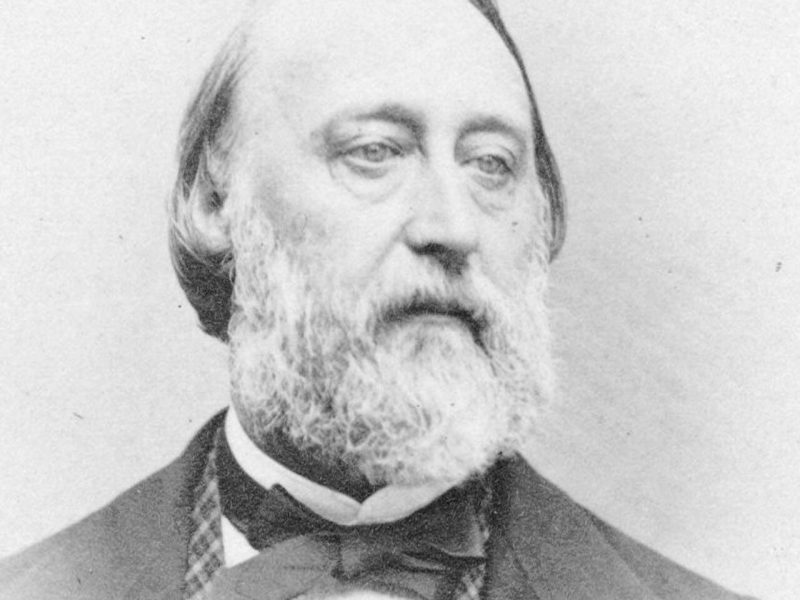
Louis Dorus was one of the most important French flutists of the nineteenth century and a decisive figure in the adoption of the modern Böhm flute in France. Born Vincent-Joseph van Steenkiste, he became known professionally as Louis Dorus and played a central role in the transition from the traditional French simple-system flute to the modern concert flute.
As a virtuoso performer, professor at the Paris Conservatoire, early advocate of Theobald Böhm’s flute, and collaborator with Louis Lot, Dorus helped shape the future of French flute playing at one of the most important turning points in flute history.
Early Life and Training
Louis Dorus was born in Valenciennes, France, on 1 March 1812. His father was a former lieutenant in the Grande Armée and later became a conductor at the Valenciennes theater, giving Dorus early exposure to music.
He studied at the Paris Conservatoire, where he received First Prize in 1828. His training placed him directly within the French flute tradition that had been shaped by François Devienne, Joseph Guillou, and Jean-Louis Tulou.
Early Performing Career
From 1828 to 1830, Dorus performed at the Théâtre des Variétés in Paris. He quickly gained attention as a young virtuoso, praised for the taste, refinement, and technical perfection of his playing.
From 1835 to 1866, he served as solo flutist of the Orchestre de la Société des Concerts du Conservatoire, one of the most important orchestras in France. This position placed him at the center of Parisian musical life and gave him significant influence over the sound and direction of French flute performance.
Early Advocate of the Böhm Flute
Dorus was one of the first major French flutists to adopt Theobald Böhm’s 1832 ring-key flute. Alongside Paul-Hippolyte Camus and Victor Coche, he belonged to the small group of early French virtuosos who recognized the potential of Böhm’s new design.
He also wrote instructional material for the Böhm flute, helping introduce the instrument to French players at a time when many performers remained attached to the traditional flute.
The Dorus G-Sharp Key
One of Dorus’s most lasting contributions to flute design was the development of the closed G-sharp mechanism, often known as the Dorus key.
Böhm’s original design used an open G-sharp key, but many French players found this unfamiliar and difficult to adapt to their existing technique. Dorus proposed a closed alternative that preserved more familiar fingering habits while retaining the advantages of Böhm’s system.
Louis Lot incorporated this mechanism into his flutes, and the Dorus key became an important feature of the French Böhm flute. Its influence remained strong and helped make the new system more acceptable to French performers.
The Conservatoire Debate
In 1839–1840, Dorus participated in the examination of Böhm’s ring-key flute at the Paris Conservatoire. However, the instrument was not adopted at that time because the Conservatoire’s flute professor, Jean-Louis Tulou, strongly opposed it.
Tulou believed that the traditional French flute could still be perfected without abandoning its tone, fingering, and expressive flexibility. This resistance delayed the official adoption of the Böhm flute in France for two decades.
Dorus stood on the opposite side of this debate. He believed the Böhm flute represented the future of the instrument and continued advocating for its acceptance.
Professor at the Paris Conservatoire
In 1860, Dorus succeeded Jean-Louis Tulou as Professor of Flute at the Paris Conservatoire.
This appointment marked a decisive turning point. In the same year, Louis Lot’s cylindrical Böhm flutes became the official instruments of the Conservatoire, ending decades of resistance and establishing the Böhm flute at the center of French flute education.
Dorus’s appointment therefore represents one of the most important institutional moments in the history of the modern flute.
Collaboration with Louis Lot
Dorus’s influence was closely connected with Louis Lot, the great French flute maker who refined Böhm’s design into what became the French model of the modern flute.
The Dorus key, incorporated by Lot, helped make the Böhm flute more practical for French players. Together, Dorus and Lot helped transform Böhm’s invention into an instrument that could be accepted by the Paris Conservatoire and, eventually, by the wider flute world.
Honors and Recognition
At the height of his career, Dorus was awarded the Légion d’honneur under Napoleon III, recognizing his status as one of France’s leading musicians.
His reputation extended throughout Parisian musical society, where he was connected with major figures of the nineteenth century, including Hector Berlioz, Giuseppe Verdi, Fromental Halévy, and Giacomo Meyerbeer.
Legacy
Louis Dorus occupies a crucial place in flute history because he helped make the modern flute acceptable within the French tradition.
Where Tulou defended the old flute and Böhm invented the new one, Dorus served as the institutional bridge between them. His advocacy, teaching, and technical contributions helped bring the Böhm flute into the Paris Conservatoire, where it became the foundation of the modern French flute school.
Through his work with Louis Lot and his role at the Conservatoire, Dorus helped shape the instrument that would define professional flute performance for generations.
Notable Achievements
- First Prize, Paris Conservatoire, 1828
- Solo flutist of the Orchestre de la Société des Concerts du Conservatoire
- One of the first major French advocates of the Böhm flute
- Participant in the 1839–1840 Conservatoire examination of Böhm’s ring-key flute
- Developer of the closed G-sharp mechanism known as the Dorus key
- Collaborator with Louis Lot in adapting the Böhm flute for French players
- Professor of Flute at the Paris Conservatoire from 1860
- Helped secure the official adoption of the Böhm flute at the Conservatoire
- Awarded the Légion d’honneur
- Central figure in the transition from the traditional flute to the modern French Böhm flute