
Paul Taffanel
Overview
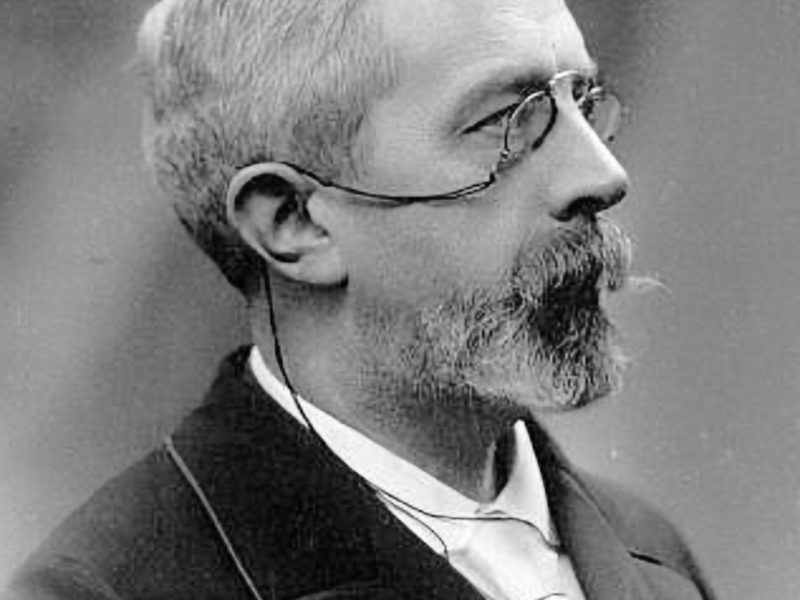
Paul Taffanel is widely regarded as the father of the modern French Flute School and one of the most influential flutists in the history of the instrument.
Often regarded as the founder of the French Flute School, he transformed flute playing, teaching, and repertoire, establishing artistic principles that continue to influence flutists around the world.
A virtuoso performer, distinguished orchestral musician, renowned professor, and respected conductor, Taffanel helped elevate the flute from a primarily virtuosic instrument to one capable of profound musical expression.
His teaching philosophy, advocacy of early music, and dedication to chamber music shaped several generations of performers and permanently changed the course of flute history.
Biography
Paul Taffanel was born on 16 September 1844 in Bordeaux, France. He began studying the flute with his father before entering the Paris Conservatoire, where he became a student of Louis Dorus, one of the leading advocates of the Boehm flute.
Displaying exceptional talent from an early age, Taffanel won the Conservatoire’s First Prize at only sixteen years old. During the following decades he established himself as the leading French flutist of his generation through an outstanding career as both soloist and orchestral musician.
His artistry restored the flute to prominence on the concert stage and demonstrated that the instrument possessed expressive possibilities equal to those of the violin or voice.
Professor at the Paris Conservatoire
In 1893, Taffanel succeeded Joseph-Henri Altès as Professor of Flute at the Paris Conservatoire.
His appointment marked a turning point in flute pedagogy. Rather than emphasizing technical display alone, Taffanel focused on:
- beautiful tone production
- musical phrasing
- expressive interpretation
- refined articulation
- natural breathing
- elegance of style
He also abandoned the traditional group masterclass model in favor of giving students greater individual attention, creating a more personalized and effective teaching environment.
Many of the twentieth century’s greatest French flutists studied directly or indirectly within the pedagogical tradition he established.
Founder of the French Flute School
Taffanel is widely recognized as the founder of the French Flute School, whose influence dominated international flute playing throughout much of the twentieth century.
Its principles include:
- beautiful singing tone
- expressive phrasing
- technical elegance
- clarity of articulation
- refined musicianship
- stylistic flexibility
- effortless virtuosity
These ideals became the foundation for generations of celebrated French flutists, including Philippe Gaubert, Marcel Moyse, Georges Barrère, Louis Fleury, and many others who carried his artistic vision throughout Europe and America.
Revival of Baroque and Classical Music
One of Taffanel’s greatest achievements was reviving eighteenth-century flute repertoire.
During the late nineteenth century, much of the music of Johann Sebastian Bach, Mozart, and other Baroque composers had largely disappeared from French flute education. Beginning in 1894, Taffanel replaced much of the fashionable Romantic salon repertoire with works by Bach and other earlier composers.
His performances and teaching played a central role in introducing Baroque music back into French musical life and helped launch the broader early music revival that continued throughout the twentieth century.
Today, Bach’s flute sonatas are considered essential repertoire largely because of Taffanel’s vision.
Chamber Music
In 1879, Taffanel founded the Société de musique de chambre pour instruments à vent (Society of Chamber Music for Wind Instruments).
The organization revived neglected chamber music by Mozart and Beethoven while inspiring contemporary composers to write new works for winds.
Among the most celebrated pieces connected with the society is Charles Gounod’s Petite Symphonie, composed specifically for Taffanel’s ensemble.
Conductor
Alongside his flute career, Taffanel became one of France’s most respected conductors.
He served as:
- Chief Conductor of the Paris Opéra
- Chief Conductor of the Société des Concerts du Conservatoire
He was the first flutist ever appointed to these prestigious conducting positions.
As conductor, he championed French composers including Camille Saint-Saëns, introduced French audiences to important foreign repertoire, conducted French premieres of works by Richard Wagner, and led the world premiere of Giuseppe Verdi’s Quattro pezzi sacri.
Playing Style
Contemporary musicians admired Taffanel for the extraordinary elegance and refinement of his playing.
His performances were characterized by:
- expressive yet natural phrasing
- exceptional rhythmic control
- remarkable technical fluency
- rich, resonant tone
- restrained, tasteful vibrato
- complete respect for the musical text
Rather than relying on theatrical effects, Taffanel believed that technical mastery should remain almost invisible, serving only the music itself.
His artistic ideals became defining characteristics of the French Flute School.
Legacy
Few musicians have influenced modern flute playing as profoundly as Paul Taffanel.
His contributions include:
- founding the French Flute School
- transforming flute pedagogy
- reviving Baroque flute repertoire
- promoting chamber music for winds
- elevating orchestral flute performance
- inspiring generations of composers
- training many of the twentieth century’s leading flutists
His pedagogical ideas continued through his student Philippe Gaubert, who completed the famous Méthode complète de flûte, still one of the world’s most influential flute methods.
Selected Works
Although Paul Taffanel composed fewer works than many of his contemporaries, his compositions, chamber music, and pedagogical publications have become enduring classics of the flute repertoire. His music reflects the elegance, expressive refinement, and technical brilliance that defined the French Flute School and continues to be performed, studied, and taught worldwide.
Solo Flute Works
Andante Pastoral et Scherzettino (1907)
Written as the Paris Conservatoire concours piece, this is Taffanel’s best-known original composition. Combining a lyrical, expressive Andante with a sparkling and virtuosic Scherzettino, it remains one of the most frequently performed works in the advanced flute repertoire.
Grande Fantaisie sur Mignon
A brilliant concert fantasy based on themes from Ambroise Thomas’s opera Mignon. The work combines operatic lyricism with dazzling virtuosity and has long been a favorite for competitions and concert performance.
Fantaisie sur des thèmes du Freischütz
A dramatic fantasy on themes from Carl Maria von Weber’s Der Freischütz, showcasing Taffanel’s gift for expressive interpretation and brilliant technical writing.
Grande Fantaisie sur Jean de Nivelle
A virtuosic operatic fantasy demonstrating Taffanel’s mastery of nineteenth-century French salon style and flute technique.
Fantaisie-Transcription sur Les Indes galantes
Based on Jean-Philippe Rameau’s opera-ballet, this work reflects Taffanel’s commitment to reviving earlier French music while adapting it for the modern Boehm flute.
12 Transcriptions for Flute and Piano
A collection of arrangements that introduced important Baroque and Classical repertoire to generations of flutists and reflected Taffanel’s pioneering interest in historical music.
Chamber Music
Wind Quintet in G Minor (Quintette pour instruments à vent, 1876)
Widely regarded as one of the masterpieces of nineteenth-century wind chamber music, this three-movement work for flute, oboe, clarinet, bassoon, and horn remains a cornerstone of the international wind quintet repertoire.
Pedagogical Works
17 Grands Exercices Journaliers de Mécanisme
Compiled with his student Philippe Gaubert, these daily technical exercises have become one of the most important collections of finger studies ever written for the flute. They continue to form part of the daily practice routine of professional flutists and conservatory students throughout the world.
Méthode Complète de Flûte (Complete Flute Method)
Completed and published after Taffanel’s death by Philippe Gaubert, this landmark method presents Taffanel’s philosophy of tone production, articulation, phrasing, technique, and musical expression. It remains one of the most influential flute methods ever published and continues to serve as a standard pedagogical text in conservatories worldwide.
Works Dedicated to Paul Taffanel
Several masterpieces of the flute repertoire were written for or dedicated to Taffanel, including:
- Gabriel Fauré — Fantaisie, Op. 79
- Charles-Marie Widor — Suite, Op. 34
- George Enescu — Cantabile et Presto
- Pyotr Ilyich Tchaikovsky planned a Flute Concerto for Taffanel shortly before his death, though the work was never completed.
Lasting Influence
More than a century after his death, Paul Taffanel remains one of the defining figures in flute history. His artistic ideals continue to shape conservatory teaching, orchestral performance, chamber music, and solo playing worldwide. Through his students, publications, and musical philosophy, his influence extends to virtually every modern flutist.