
Philippe Gaubert
Overview
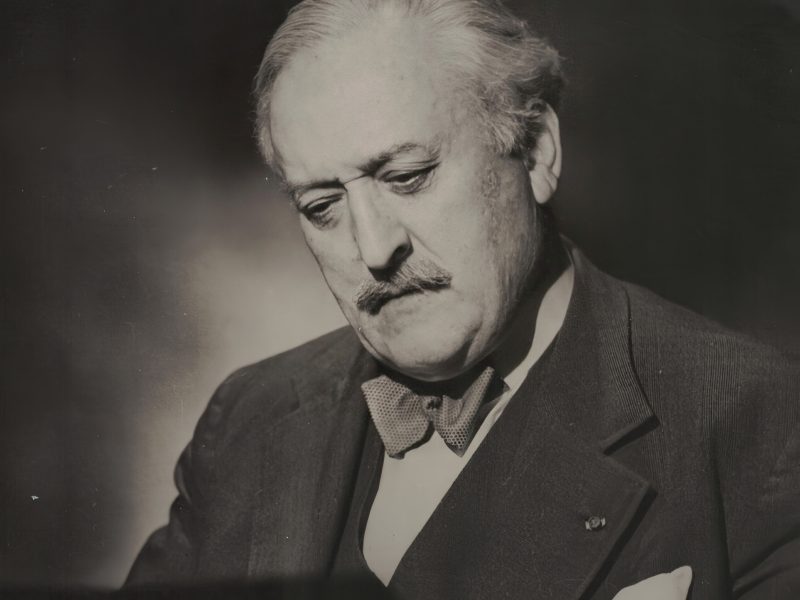
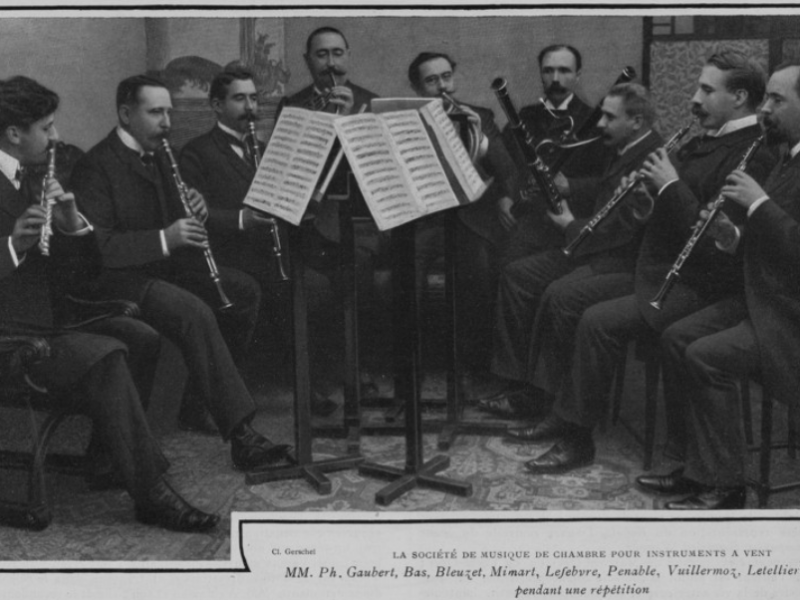
Philippe Gaubert was one of the most influential French flutists of the twentieth century — a virtuoso performer, renowned conductor, composer, and educator who carried the artistic vision of Paul Taffanel into a new generation. As Taffanel’s greatest student and successor, Gaubert helped establish the French Flute School as the international standard for flute performance and pedagogy.
Beyond his distinguished career as a soloist, Gaubert became one of the central figures of French musical life between the two World Wars, simultaneously serving as Professor of Flute at the Paris Conservatoire, Principal Conductor of the Paris Opéra, and Principal Conductor of the Orchestre de la Société des Concerts du Conservatoire.
His influence reached virtually every aspect of French flute playing through his performances, teaching, conducting, compositions, and pedagogical publications.
Early Life and Education
Philippe Gaubert was born on 5 July 1879 in Cahors, France. His family moved to Paris when he was still a child, where his remarkable musical talent attracted the attention of Paul Taffanel. Taffanel began teaching the young Gaubert privately before admitting him to the Paris Conservatoire in 1893.
Gaubert quickly distinguished himself, winning the Premier Prix for Flute in 1894 at only fourteen years of age. Alongside his flute studies, he pursued harmony and composition with Raoul Pugno, Xavier Leroux, and Charles Lenepveu, later earning the Second Prix de Rome in 1905.
Career
Gaubert rapidly established himself as one of France’s leading flutists. He became principal flutist of the Paris Opéra, while simultaneously building an international reputation as both conductor and composer.
Following World War I, he occupied three of the most prestigious musical positions in France:
- Professor of Flute at the Paris Conservatoire (succeeding Paul Taffanel)
- Principal Conductor of the Paris Opéra
- Principal Conductor of the Orchestre de la Société des Concerts du Conservatoire
Few musicians have simultaneously achieved such distinction as performer, teacher, conductor, and composer.
As a conductor, Gaubert championed both established masterpieces and contemporary French music. He conducted important premieres by Albert Roussel, Gabriel Fauré, Henri Sauguet, Jacques Ibert, Gabriel Pierné, and many other composers, while also presenting notable performances of Wagner, Berlioz, Monteverdi, and Debussy.
In 1907, he participated as flutist in the premiere of Maurice Ravel’s Introduction et Allegro, one of the defining chamber works of the twentieth century.
Teacher and Legacy
As Professor of Flute at the Paris Conservatoire, Gaubert became one of the most influential flute pedagogues of his generation.
Among his many distinguished students was Marcel Moyse, who would himself become one of history’s greatest flute teachers and profoundly influence modern flute playing around the world.
Working from Taffanel’s notes after his teacher’s death, Gaubert completed and published the Méthode Complète de Flûte in 1923, one of the most influential flute methods ever written. Together with the 17 Grands Exercices Journaliers de Mécanisme, this publication remains a cornerstone of professional flute training and continues to be studied in conservatories worldwide.
His lyrical approach, refined tone, elegant phrasing, and emphasis on expressive musicality helped define the modern French flute tradition.
Compositional Style
Although his conducting career occupied much of his professional life, Gaubert composed a substantial body of highly refined music characterized by elegant melodies, rich harmonic language, and the transparent colors associated with French Impressionism.
His flute works combine technical brilliance with expressive lyricism and remain among the most frequently performed pieces in the professional repertoire. Beyond flute music, Gaubert composed orchestral works, operas, ballets, songs, and chamber music, many of which deserve wider recognition.
Selected Works
Flute and Piano
- Fantaisie
- Nocturne et Allegro Scherzando
- Sonatine
- Suite
- Madrigal
- Romance (1905)
- Romance (1908)
- Sicilienne
- Sur l’eau
- Berceuse
- 2 Esquisses
Flute Sonatas
- Sonata No. 1 in A Major
- Sonata No. 2 in C Major
- Sonata No. 3 in G Major
Chamber Music
- 3 Aquarelles for flute, cello and piano
- Pièce Romantique for flute, cello and piano
- Médailles antiques for flute, violin and piano
- Divertissement Grec for two flutes and harp
- Tarantelle for flute, oboe and piano
Orchestral Works
- Les Chants de la mer
- Symphony in F Major
- Concert in F
- Les Chants de la terre
- Au Pays Basque
Stage Works
- Naïla (opera)
- Sonia (opera)
- Philotis, danseuse de Corinthe (ballet)
- Le Chevalier et la Demoiselle (ballet)
Pedagogical Works
- Méthode Complète de Flûte (completed from Paul Taffanel’s manuscripts)
- 17 Grands Exercices Journaliers de Mécanisme (with Paul Taffanel)
Honors
- Chevalier of the Légion d’honneur (1921)
- Commander of the Légion d’honneur (1938)
Importance
Philippe Gaubert occupies a unique position in flute history. He was not only Paul Taffanel’s most distinguished student but also the musician who preserved, expanded, and transmitted the French Flute School to future generations.
His students, pedagogical writings, compositions, recordings, and conducting established artistic standards that continue to influence professional flutists throughout the world.
The legendary flutist Jean-Pierre Rampal famously considered Gaubert “the greatest flutist of them all,” not merely the greatest of his own generation.
Today, Gaubert’s music remains a central part of the international flute repertoire, while his pedagogical legacy continues to shape flute education in conservatories across the globe.