
François Devienne
Overview
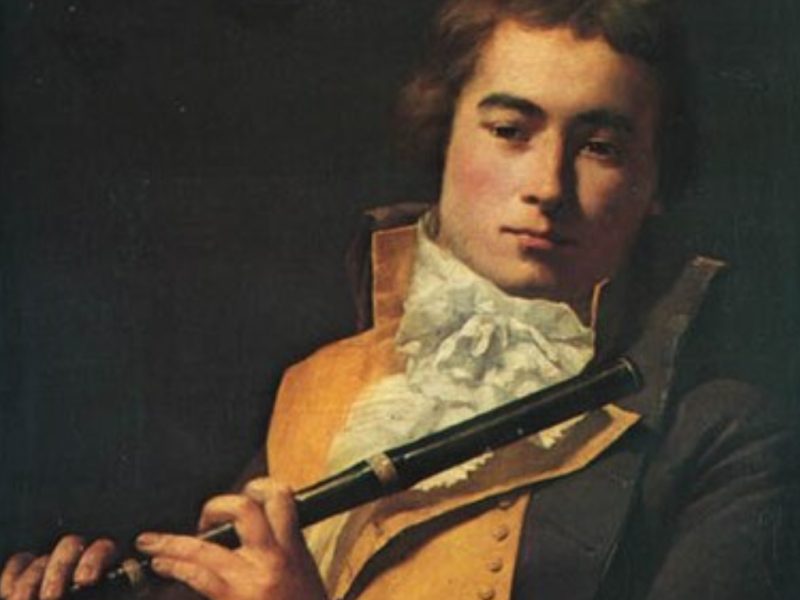
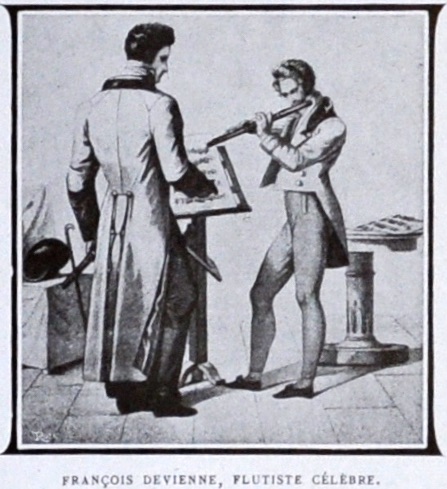
François Devienne was one of the most important French flutists, bassoonists, composers, and pedagogues of the Classical era. Often called the “Mozart of the Flute” for the elegance, clarity, and balance of his writing, he played a central role in shaping French wind music at the end of the eighteenth century.
As one of the founding professors of the Paris Conservatoire, Devienne helped establish the early foundations of the French flute school. His music, teaching, and flute method influenced generations of performers and remain essential to Classical-era flute repertoire today.
Early Life and Training
Devienne was born in Joinville, Haute-Marne, France, in 1759. He received his earliest musical training as a choirboy in his hometown and likely studied with the local organist Morizot. He later continued his musical education with his elder brother and godfather, François Memmie, in Deux-Ponts, now Zweibrücken, from 1776 to 1778.
By the late 1770s, Devienne had moved to Paris, where he quickly entered the city’s professional musical world.
Performer in Paris
In 1779, Devienne joined the orchestra of the Paris Opéra as a bassoonist and began studying flute with Félix Rault, the Opéra’s principal flutist. He became active in Paris as both a flutist and bassoonist, appearing as a soloist and orchestral musician in several important ensembles.
From 1780 to 1785, he served as a musician in the household of Cardinal de Rohan. He was also associated with the Concert Spirituel and likely performed with the orchestra of the Loge Olympique, an important Masonic musical organization connected with some of the leading musicians of the period.
Devienne appeared frequently as a soloist at the Concert Spirituel, performing both flute and bassoon concertos. His first recorded public appearance as a composer took place in 1780 with a bassoon concerto, and in 1782 he performed a new flute concerto, probably his Flute Concerto No. 1 in D major.
Military Band and the Free School of Music
During the Revolutionary period, Devienne joined the Military Band of the French Guard, later connected with the National Guard. He was given the rank of sergeant and was responsible for teaching music to the children of his colleagues in the military band.
This educational activity became part of the Free School of Music of the National Guard, which was renamed the National Institute of Music in 1793 and later became the Paris Conservatoire in 1795.
Devienne’s work in this institution placed him at the beginning of formal French wind-instrument pedagogy.
Professor at the Paris Conservatoire
When the Paris Conservatoire was officially established in 1795, Devienne became one of its founding administrators and was appointed Professor of Flute.
His teaching helped raise the standard of French wind playing and contributed directly to the formation of the French flute school. Among his students was François René Gebauer, who later became an important bassoonist and composer.
Devienne’s pedagogical influence was especially important because he helped create a systematic approach to flute instruction at the very moment when public conservatory education was being established in France.
The Flute Method
Devienne’s Nouvelle Méthode Théorique et Pratique pour la Flûte, published in 1794, became one of the most important flute methods of the late eighteenth and early nineteenth centuries.
Written for the one-keyed flute, the method includes instruction on assembling the instrument, holding the flute, producing tone, tonguing, articulation, trills, turns, appoggiaturas, syncopation, exercises, progressive airs, duets, and sonatas.
It remained influential for many decades and is still valuable today as a source for Classical-period flute technique and performance practice.
Composer
Devienne was an exceptionally prolific composer, with an output of approximately 300 instrumental works, most of them written for wind instruments.
His compositions include:
- 12 flute concertos
- Numerous flute sonatas and duets
- Sinfonias and sinfonies concertantes for winds
- Quartets and trios for various ensembles
- 5 bassoon concertos
- 6 bassoon sonatas
- 6 oboe sonatas
- 12 operas
- Chamber music for flute, bassoon, clarinet, oboe, strings, and keyboard
His writing is elegant, lyrical, technically brilliant, and classically proportioned. His flute concertos, especially Concertos Nos. 7 and 8, remain among the most important works of the Classical flute repertoire.
Opera and Revolutionary France
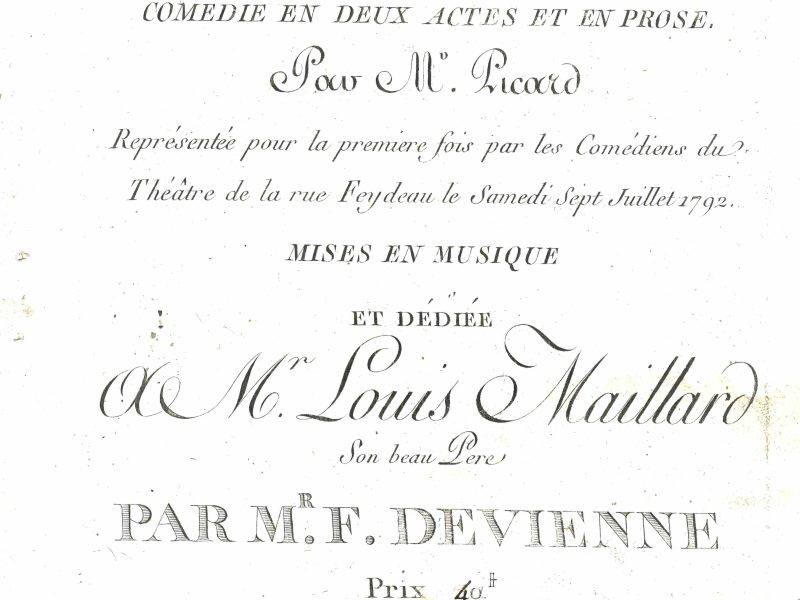
Devienne was also a successful opera composer. His opéra comique Les Visitandines, first performed in 1792, became one of the most successful French operas of the Revolutionary period, receiving more than 200 performances in Paris between 1792 and 1797.
His success as an opera composer shows that he was not only a flute specialist, but a major figure in the broader musical culture of Revolutionary France.
Musical Style
Devienne’s music reflects the elegance and refinement of the Classical period. His works are known for graceful melodies, clear structure, balanced phrasing, brilliant yet idiomatic writing, and a strong understanding of wind-instrument technique.
His flute music combines lyricism with virtuosity, making it equally valuable for performance and study.
Final Years
After years of intense professional activity, Devienne’s health declined rapidly. In 1803, he was admitted to Charenton, a Parisian institution for the mentally ill, where he died later that year at the age of forty-four.
Despite his short life, his influence on French wind music was extraordinary.
Legacy
François Devienne stands at a crucial point in flute history. He belongs to the Classical era, but his work directly prepared the way for the nineteenth-century French flute school represented later by Jean-Louis Tulou, Louis Dorus, Paul Taffanel, and Philippe Gaubert.
As a performer, composer, teacher, and founding professor of the Paris Conservatoire, Devienne helped define the artistic and pedagogical standards of French flute playing.
His music remains central to the Classical flute repertoire, while his method continues to serve as an important historical source for understanding one-keyed flute technique and late eighteenth-century performance practice.
Notable Works
- 12 Flute Concertos
- Flute Concerto No. 7 in E minor
- Flute Concerto No. 8 in G major
- Nouvelle Méthode Théorique et Pratique pour la Flûte (1794)
- Six Sonatas for Flute and Bass
- Sonatas, Op. 68
- Sinfonies concertantes for winds
- Les Visitandines (1792)
- Bassoon concertos and sonatas
- Chamber works for flute, bassoon, clarinet, oboe, strings, and keyboard
Notable Achievements
- One of the most important French flutists of the Classical era
- Celebrated as the “Mozart of the Flute”
- Founding professor of flute at the Paris Conservatoire
- One of the original administrators of the Conservatoire
- Author of one of the most influential early Conservatoire flute methods
- Major contributor to Classical flute and bassoon repertoire
- Successful opera composer during the French Revolution
- Helped establish the foundations of the French flute school
- Important bridge between eighteenth-century flute tradition and nineteenth-century French flute pedagogy