
Jacques-Martin Hotteterre
Overview
Jacques-Martin Hotteterre (1674–1763), known as “Le Romain,” was one of the most important figures in the early history of the transverse flute. A French Baroque flutist, composer, teacher, court musician, and member of the celebrated Hotteterre family of woodwind makers, he played a decisive role in establishing the flute as a refined solo and chamber instrument in France.
Hotteterre is especially significant as one of the earliest and most influential flute pedagogues. His writings helped codify flute technique, articulation, ornamentation, fingering, and performance practice at a time when the transverse flute was becoming central to French court and chamber music.
Historical Importance
Hotteterre belonged to a distinguished dynasty of French woodwind makers and musicians. The Hotteterre family was closely associated with the development of Baroque woodwind instruments, including flutes, recorders, oboes, bassoons, and musettes.
As a performer at the court of Louis XIV, Hotteterre occupied a prestigious position within one of the most influential musical environments in Europe. His court career, combined with his practical knowledge of instrument making and his activity as a teacher, placed him at the center of the flute’s transformation from a relatively specialized instrument into a fashionable and expressive voice of French Baroque music.
Founder of the French Flute School
Jacques-Martin Hotteterre is often regarded as a foundational figure of the French flute school. His approach emphasized elegance, clarity, expressive ornamentation, refined articulation, and a singing style of playing.
Through his teaching and publications, he established principles that became central to French flute performance:
- graceful phrasing
- controlled articulation
- tasteful ornamentation
- expressive use of agréments
- refined tone production
- practical fingering systems
- stylistic discipline within musical freedom
His influence extended beyond France and helped shape broader European flute pedagogy in the eighteenth century.
Pedagogical Treatises
Principes de la flûte traversière — 1707
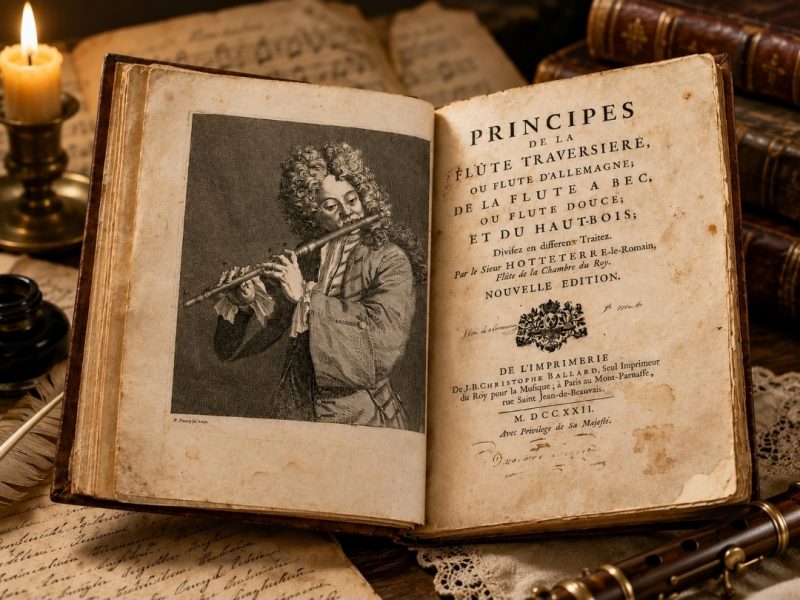
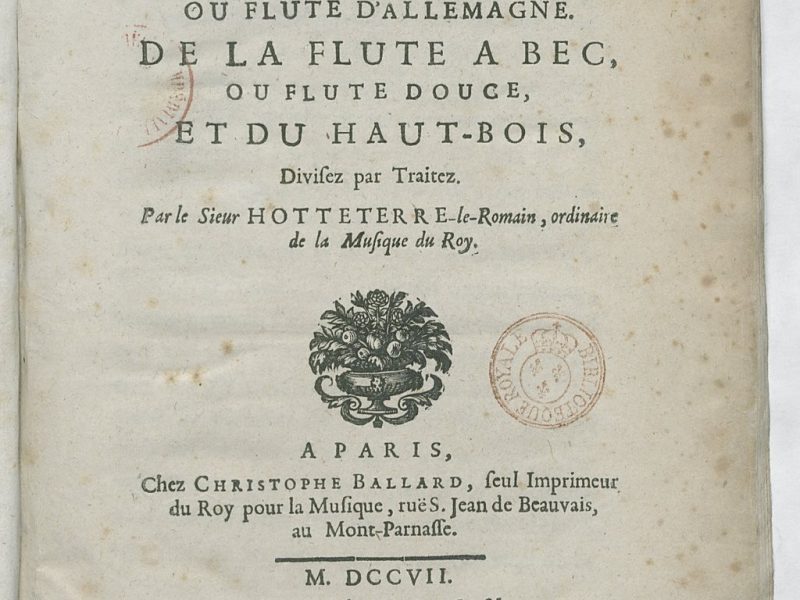
Hotteterre’s most important pedagogical work, Principes de la flûte traversière, ou flûte d’Allemagne; de la flûte à bec, ou flûte douce; et du haut-bois, was published in 1707.
It is considered the first major printed method for the Baroque transverse flute. The treatise also addressed the recorder and oboe, making it one of the most important early woodwind methods.
The book includes instruction on:
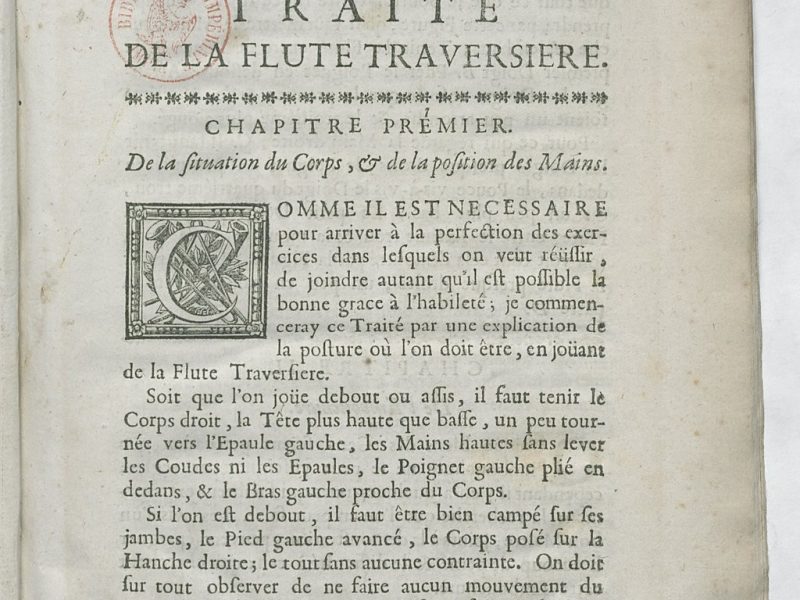
- how to hold the flute
- embouchure formation
- breath control
- fingering
- intonation
- articulation
- ornaments and agréments
- trills
- appoggiaturas
- expressive playing
- practical performance conventions
Its importance lies not only in the technical information it preserves, but also in the way it documents the musical taste and performance practice of early eighteenth-century France.
L’Art de préluder sur la flûte traversière — 1719
In 1719, Hotteterre published L’Art de préluder sur la flûte traversière, a treatise devoted to the art of preluding and improvisation.
This work provided models for free preludes in different keys and characters, helping flutists develop musical imagination, harmonic understanding, and stylistic fluency. It remains an important source for performers interested in Baroque improvisation and historically informed performance.
Teaching Legacy
Hotteterre was a highly respected teacher in Paris and at court. His students included aristocratic amateurs, among them Philippe II, Duke of Orléans.
His teaching helped make the transverse flute a fashionable instrument among the French nobility. At the same time, his printed methods allowed his pedagogical ideas to reach musicians far beyond his own studio.
His approach was practical, clear, and systematic, making difficult stylistic concepts accessible to both advanced musicians and cultivated amateurs.
Contribution to Flute Technique
Hotteterre helped define many essential aspects of early flute playing. His writings discuss articulation syllables, ornamentation, fingerings, and expressive devices that remain central to modern study of Baroque flute performance.
His description of tonguing, including contrasting syllables for different types of articulation, helped shape later flute pedagogy. His treatment of ornaments such as trills, appoggiaturas, and flattement provides invaluable insight into French Baroque style.
For modern flutists and scholars, Hotteterre’s work remains one of the clearest windows into the sound world of the early transverse flute.
Performer and Court Musician
Hotteterre served in the musical institutions of the French royal court during the reign of Louis XIV. He was associated with the Grande Écurie and later served as flutist of the King’s Chamber.
His position at court gave him direct access to the highest levels of French musical culture. His performing career reinforced the prestige of the transverse flute and helped bring the instrument into refined chamber and courtly settings.
Composer for the Flute
In addition to his teaching, Hotteterre composed important music for the transverse flute. His works include suites, sonatas, duets, and chamber music that reflect the elegance of French Baroque style.
His compositions helped expand the flute repertoire and demonstrated the expressive possibilities of the instrument. They were designed not only as concert pieces, but also as models of style, taste, ornamentation, and phrasing.
Notable works include:
- Pièces pour la flûte traversière, Op. 2
- Sonates en trio, Op. 3
- Première suite de pièces à deux dessus, Op. 4
- Deuxième livre de pièces, Op. 5
- L’Art de préluder, Op. 7
Instrument-Making Background
Hotteterre came from one of the most important woodwind-making families in France. The Hotteterre family contributed to the development of the Baroque flute, recorder, oboe, bassoon, and musette.
Although Jacques-Martin Hotteterre is remembered primarily as a performer, composer, and pedagogue, his connection to instrument making gave him a uniquely practical understanding of woodwind design and acoustics. This background helped inform his teaching and his detailed explanations of fingering, tone production, and instrument handling.
Influence on Later Flute Pedagogy
Hotteterre’s pedagogical writings influenced later eighteenth-century flute methods and performance traditions. His emphasis on articulation, tasteful ornamentation, and expressive refinement helped prepare the way for later flute pedagogues, including Johann Joachim Quantz.
While the flute would continue to evolve mechanically and stylistically, Hotteterre’s treatises remained foundational documents for understanding the earliest mature phase of transverse flute playing.
Modern Relevance
Today, Hotteterre’s treatises are essential sources for historically informed performance. Baroque flutists, recorder players, oboists, scholars, and teachers continue to study his writings to understand early eighteenth-century technique and French musical taste.
His music remains part of the Baroque flute repertoire, and his pedagogical ideas continue to shape modern teaching of historical flute performance.
Legacy
Jacques-Martin Hotteterre stands at the beginning of written flute pedagogy. As a performer, teacher, composer, and member of a major instrument-making family, he helped define the identity of the transverse flute in the Baroque era.
His legacy is not limited to his own compositions. Through his treatises, he gave future generations a language for flute technique, style, ornamentation, and expression. For this reason, Hotteterre remains one of the most important founders of the flute tradition and a central figure in the history of flute education.