
Pierre-Gabriel Buffardin
Overview
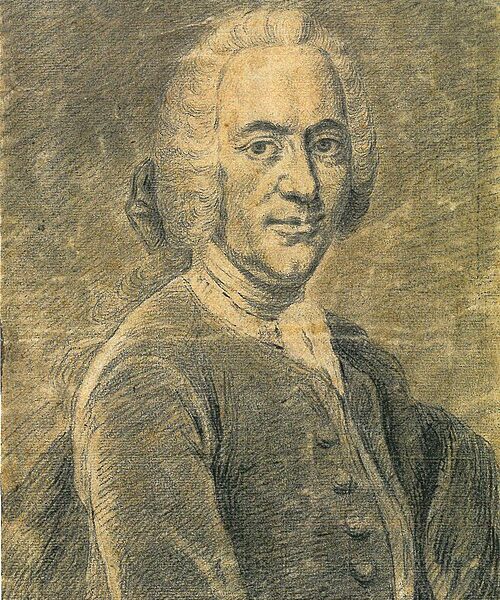
Pierre-Gabriel Buffardin was a French Baroque flutist whose extraordinary virtuosity established him as one of the greatest flute performers of the eighteenth century. As principal flutist of the Dresden Hofkapelle for more than three decades, he became one of Europe’s most celebrated flute soloists and played a central role in elevating the transverse flute to prominence within the Baroque orchestra and as a solo instrument.
Although relatively little of his music survives, Buffardin’s legendary technique, brilliant articulation, and expressive playing earned widespread admiration among his contemporaries. His artistry influenced an entire generation of flutists, most notably Johann Joachim Quantz, who regarded him as one of the finest performers of his age.
Early Life
Pierre-Gabriel Buffardin was born in Toulon, France, on March 24, 1693. Little is known about his early musical education, although he likely received his first musical experiences in Provence before beginning an international career at a remarkably young age.
Around 1711, Buffardin traveled to Constantinople with the French ambassador, where he met Johann Jacob Bach, the elder brother of Johann Sebastian Bach, and introduced him to the transverse flute.
Dresden Hofkapelle
In 1715, Buffardin was appointed principal flutist of the Dresden Hofkapelle, one of Europe’s finest court orchestras under Augustus the Strong and later Augustus III.
His appointment marked the beginning of a distinguished thirty-four-year career in Dresden, where he performed alongside many of the greatest musicians of the Baroque era. The orchestra attracted leading composers and performers from across Europe, and Buffardin quickly became one of its most admired soloists.
His exceptional reputation was reflected in his salary, which was doubled in 1741, making him one of the highest-paid musicians at the Saxon court.
Performing Style
Buffardin was renowned for his extraordinary technical brilliance, particularly his remarkable speed and precision.
Johann Joachim Quantz later recalled:
“He only played fast pieces, for that was what my teacher excelled at.”
While this famous remark emphasizes Buffardin’s virtuosity, contemporary accounts also praise the elegance, refinement, and clarity of his playing. His performances represented the finest traditions of the French Baroque flute school while demonstrating technical possibilities that few performers of the period could equal.
Buffardin helped establish new standards of virtuosity at a time when the transverse flute was still emerging as an important solo instrument.
Concert Career
Although permanently based in Dresden, Buffardin performed internationally and was admired throughout Europe.
In 1726 he appeared as one of the earliest flute soloists at the Concert Spirituel in Paris, one of Europe’s most prestigious public concert series. His performances further enhanced his reputation and helped establish the flute as a respected concert instrument.
His influence extended well beyond Germany through performances, teaching, and his association with leading composers and musicians of the period.
Repertoire
Only a small portion of Buffardin’s repertoire survives today.
His best-known composition is the Concerto in E Minor for Flute, a brilliant work that reflects the virtuosic style for which he was famous.
Several sonatas are also attributed to Buffardin, although the authorship of some works remains uncertain. Modern scholarship has identified additional anonymous sonatas that may belong to his output, illustrating a style characterized by elegant melodic writing and technically demanding passagework.
Legacy
Pierre-Gabriel Buffardin occupies a unique position in flute history.
As one of the earliest internationally renowned flute virtuosos, he demonstrated that the transverse flute could rival the violin and other leading solo instruments in brilliance and expressive power. His performances helped establish the instrument’s prestige throughout Europe during the first half of the eighteenth century.
His artistry profoundly influenced Johann Joachim Quantz, who later codified many aspects of eighteenth-century flute performance in his celebrated treatise On Playing the Flute. Through Quantz and the Dresden musical tradition, Buffardin’s performing style continued to shape flute playing long after his death.
Today he is remembered as one of the defining flute virtuosos of the Baroque era and one of the performers who laid the foundation for the instrument’s future development.
Selected Repertoire
- Concerto in E Minor for Flute and Strings (Concerto à cinq)
- Flute Sonata
- Attributed Sonatas for Flute and Basso Continuo
- Attributed Trio Sonata in A Major
Contributions
- One of the greatest flute virtuosos of the Baroque era
- Principal Flutist of the Dresden Hofkapelle (1715–1749)
- Among the earliest internationally celebrated flute soloists
- Helped establish the transverse flute as a major solo instrument
- Introduced French virtuoso flute playing to the German courts
- Influenced Johann Joachim Quantz and the next generation of flutists
- Performed at the prestigious Concert Spirituel in Paris
- Set new standards of technical brilliance and expressive performance in eighteenth-century flute playing