
Jean-Louis Tulou
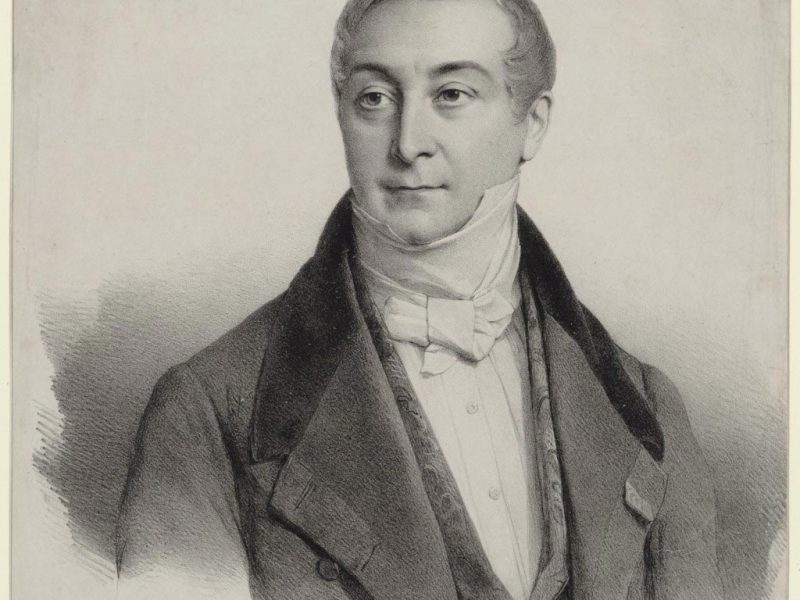
Overview
Jean-Louis Tulou was one of the most celebrated flutists of the nineteenth century and a defining figure of the French flute school. A virtuoso performer, composer, professor at the Paris Conservatoire, and influential flute maker, he shaped French flute playing for more than half a century.
His career spanned the French Revolution, the Napoleonic Empire, the Bourbon Restoration, and the July Monarchy. Throughout these political changes, Tulou remained one of France’s leading musicians, serving the Imperial Court, the Royal Chapel, the Paris Opéra, and the Paris Conservatoire while training a new generation of flutists.
Although remembered today for his opposition to the Böhm flute, Tulou was equally important as a performer whose artistry established the expressive ideals of the French simple-system flute.
Early Life and Musical Education
Born in Paris in 1786, Jean-Louis Tulou grew up in a musical family. Encouraged by musicians associated with the Paris Opéra, he entered the newly established Paris Conservatoire in 1796, where he studied with Johann Georg Wunderlich.
His extraordinary talent became apparent almost immediately. Tulou won second prize in the Conservatoire flute competition in both 1799 and 1800 before earning First Prize in 1801 at only fifteen years of age.
During the prize ceremony, Tulou performed before Napoleon Bonaparte, who personally congratulated and embraced the young flutist — an event that marked the beginning of his remarkable career.
Imperial and Royal Court Musician
Tulou quickly rose through the ranks of French musical life.
In 1804 he joined the prestigious Italian Theatre orchestra, later becoming First Flute at the Paris Opéra after succeeding his former teacher, Johann Georg Wunderlich.
At the same time, he served as a musician of Napoleon’s Imperial Chapel, performing at imperial ceremonies, state occasions, and court concerts throughout France and the Netherlands. Following the Restoration in 1814, Tulou successfully retained his position under the Bourbon monarchy, serving both Louis XVIII and Charles X in the Royal Chapel and Royal Chamber Music.
Few musicians successfully navigated such dramatic political changes while maintaining positions of the highest artistic prestige.
Exile and Return
In 1821, frustrated by financial disputes with the Paris Opéra, Tulou resigned and moved to London in search of greater opportunities.
Although he performed successfully in England, his artistic and financial expectations were not fully realized, and he returned to Paris in 1822. After several years of negotiations and concert activity, he regained his position as First Flute at the Paris Opéra in 1827, continuing a distinguished performing career while expanding his teaching, composing, and instrument-making activities.
Professor at the Paris Conservatoire
Tulou became Professor of Flute at the Paris Conservatoire in 1829 and remained one of its most influential teachers until his retirement in 1860.
His Progressive and Reasoned Flute Method became the official Conservatoire method and shaped French flute pedagogy for decades. Numerous leading nineteenth-century flutists studied under his guidance, helping establish the characteristic elegance, flexibility, and expressive tone associated with the French flute school.
Composer
Alongside his performing and teaching career, Tulou composed extensively for the flute.
His works include concertos, fantasies, duos, chamber music, études, and pedagogical compositions, many of which remain valuable today for students and performers of the simple-system flute. His music combines virtuosity with lyricism and reflects the refined style of early Romantic French flute playing.
Performer and Musical Style
Contemporaries regarded Tulou as one of Europe’s finest flutists.
He was admired for the beauty of his tone, refined phrasing, expressive playing, and remarkable technical facility. Although he developed increasingly sophisticated flutes as a maker, he reportedly preferred performing on relatively simple four- and five-key instruments, believing that musical expression depended more on the performer than on mechanical complexity.
This philosophy became central to his later opposition to the Böhm flute.
Honors and Recognition
Throughout his life, Tulou received numerous distinctions recognizing his achievements as a performer, teacher, flute maker, and public servant.
Among his honors were:
- First Prize, Paris Conservatoire (1801)
- Chevalier of the Legion of Honour (1830)
- Medal of Honor for service during the July Revolution (1830)
- Honourable Mention for his improved flute at the Great Exhibition, London (1851)
- Knight of the Order of Leopold (Belgium, 1851)
- Knight of the Order of the Oak Crown (Netherlands, 1851)
These distinctions reflected the extraordinary international reputation he enjoyed during his lifetime.
Retirement and Final Years
Tulou retired from the Paris Conservatoire in 1860 and settled in Nantes, where he remained active in local musical life, continued composing, and maintained contact with former students.
He died in Nantes on 23 July 1865 after a career that had profoundly influenced French flute performance, pedagogy, and instrument making.
Legacy
Jean-Louis Tulou occupies a unique place in flute history because he excelled simultaneously as a performer, teacher, composer, and flute maker.
His artistry defined the French simple-system tradition at its highest level, while his teaching influenced generations of flutists. His flute designs represented the culmination of the traditional French flute before the widespread adoption of the Böhm system, making him one of the pivotal figures in the evolution of the modern flute.
Notable Achievements
- First Prize, Paris Conservatoire at age fifteen
- Performed before Napoleon Bonaparte
- First Flute of the Paris Opéra
- Musician of the Imperial Chapel and Royal Chapel
- Professor of Flute at the Paris Conservatoire (1829–1860)
- Author of the official Conservatoire flute method
- Leading representative of the French simple-system flute school
- Influential composer, pedagogue, and flute maker
- Internationally honored by France, Belgium, and the Netherlands