
Johann Joachim Quantz
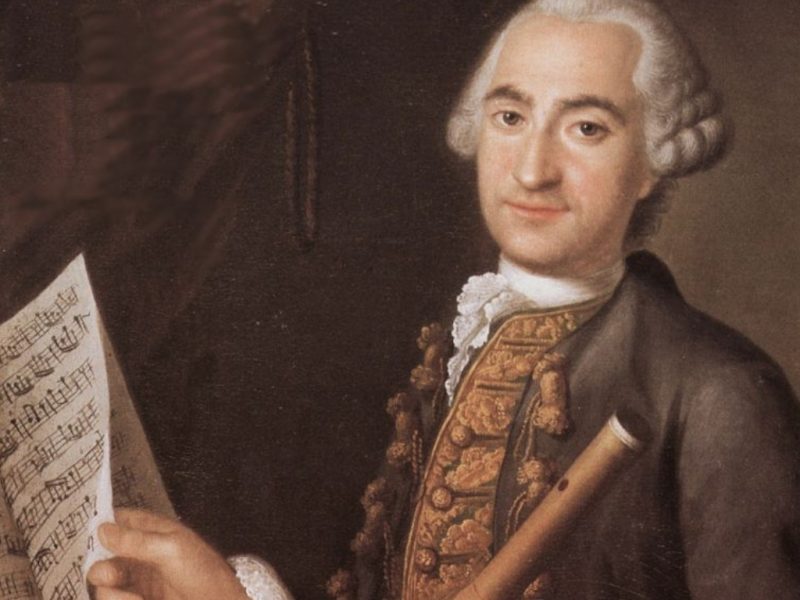
Johann Joachim Quantz (1697–1773) stands as one of the most influential figures in the history of the flute. A virtuoso performer, innovative instrument maker, prolific composer, and one of the earliest authoritative writers on flute performance, Quantz shaped the foundations of modern flute playing in ways that continue to resonate today.
Born in Oberscheden, Germany, Quantz received early musical training as a town musician before rising to prominence in the courts of Dresden and Berlin. His life changed profoundly when he became flute teacher, chamber musician, and trusted musical advisor to Crown Prince Frederick of Prussia (later Frederick the Great). Quantz supervised nearly every aspect of Frederick’s musical life — from daily lessons to instrument design — and eventually composed over 300 flute concertos and more than 200 sonatas expressly for the king.
Quantz was also a pioneering flute maker. Dissatisfied with the limitations of the instruments of his day, he developed innovative design improvements, including the famous second key (the “Quantz key”), which expanded both intonation and expressive capability. His instruments became prized for their beauty, craftsmanship, and acoustic refinement.
His most enduring legacy is his monumental treatise, Versuch einer Anweisung die Flöte traversiere zu spielen (1752),
a comprehensive guide to flute technique, ornamentation, articulation, musical rhetoric, and Baroque performance practice. This work remains one of the most important pedagogical documents in the entire history of wind playing and a cornerstone for historically informed performance.
Quantz’s influence extends far beyond his lifetime: his ideas shaped the development of the flute, informed the musical tastes of Europe’s Enlightenment courts, and continue to guide flutists, scholars, and instrument makers nearly three centuries later.