
Reform Flutes (Schwedler–Kruspe System)
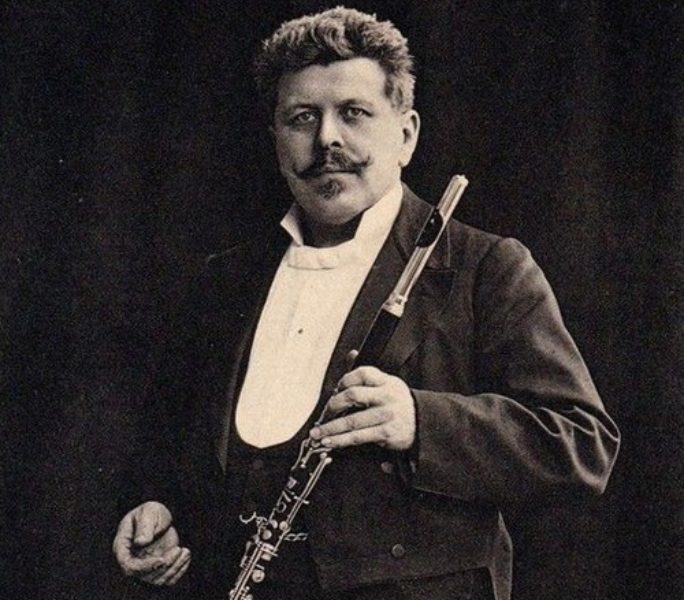
The Reform Flute (Reformflöte) was one of the most ambitious attempts to modernize the traditional simple-system flute while preserving its characteristic sound and playing style.
Developed in Germany by flutist, teacher, and inventor Maximilian Schwedler in collaboration with flute maker Carl Kruspe, the Reform Flute was introduced in 1898 and became one of the most influential alternative flute systems of the late nineteenth and early twentieth centuries.
Maximilian Schwedler (1853–1940) served as Principal Flutist of the Leipzig Gewandhaus Orchestra from 1881 to 1917 and taught at the Leipzig Conservatory for more than three decades.
Although he admired many aspects of modern flute development, Schwedler believed that the traditional conical-bore flute possessed a warmth, flexibility, and blend that the cylindrical Böhm flute could not fully replicate. His goal was not to replace the simple-system flute, but to improve it.
The result was the Reform Flute, officially known as the Reformflöte System Schwedler-Kruspe. The design combined elements of traditional flute construction with innovative mechanisms intended to improve intonation, response, projection, and technical facility while preserving the tonal qualities favored by many German orchestral players.
Unlike the standard Böhm flute, Reform Flutes retained a conical bore and much of the traditional simple-system fingering. However, Schwedler introduced numerous mechanical innovations, including repositioned tone holes, automatic venting systems, specialized F-sharp and D mechanisms, and a unique metal headjoint fitted with the characteristic Schwedler embouchure. These features allowed the instrument to produce a stronger, more even sound while maintaining the darker tonal character associated with German flute playing.
One of the most significant innovations was the famous F-sharp mechanism, which automatically improved venting and intonation for numerous notes throughout the instrument’s range. Additional developments included the D-mechanism introduced in 1904 and the F-mechanism introduced in 1912, both designed to improve tuning accuracy and simplify technical execution.
Reform Flutes were manufactured by several leading German workshops, including Carl Kruspe, Moritz Max Mönnig, G. H. Hüller, Wurlitzer, and Kohlert. Numerous variations were produced during the early twentieth century, ranging from relatively simple models to highly sophisticated instruments with extensive keywork and venting systems.
For several decades, Reform Flutes were widely used in German orchestras and conservatories. Their warm, blended tone suited the aesthetic ideals of many conductors and performers who preferred a more integrated orchestral flute sound rather than the brighter, more projecting tone associated with the Böhm flute.
Despite their musical qualities, the complexity of the mechanism ultimately contributed to the system’s decline. By the mid-twentieth century, the Böhm flute had become the international standard, and Reform Flutes gradually disappeared from professional use. Nevertheless, they remain among the most fascinating and technically sophisticated alternative flute systems ever developed.
Today, surviving Reform Flutes are highly valued by collectors, flute historians, and specialists interested in the evolution of flute design during the transitional period between traditional simple-system flutes and the modern Böhm flute.
Associated Makers:
• Carl Kruspe
• Moritz Max Mönnig
• G. H. Hüller
• Wurlitzer
• Kohlert
Types of Instruments:
• Reform Flutes
• Schwedler–Kruspe System Flutes
• Conical-Bore Flutes
• German Orchestral Flutes
Materials:
• Grenadilla
• Boxwood
• Ebonite components
• Silver
• Nickel silver
• Silver-plated metals
Notable Innovations:
• Reform Flöte System Schwedler-Kruspe
• Schwedler Embouchure
• F-sharp Mechanism
• D-Mechanism
• F-Mechanism
• Advanced Venting Systems
• Metal Headjoint on Conical-Bore Flute
Legacy:
• Most important German alternative to the Böhm flute
• Preserved traditional conical-bore flute sound in orchestral performance
• Influenced German flute design during the late nineteenth and early twentieth centuries
• Represents one of the most sophisticated non-Böhm flute systems ever developed